



- 2025
- June 2025
- May 2025
- April 2025
- March 2025
- February 2025
- January 2025
- 2024
- December 2024
- November 2024
- October 2024
- September 2024
- August 2024
- July 2024
- June 2024
- May 2024
- April 2024
- March 2024
- February 2024
- 2023
- December 2023
- November 2023
- October 2023
- January 2023
- 2022
- September 2022
- 2021
- November 2021
- May 2021
- 2020
- August 2020
- July 2020
- June 2020
- April 2020
- 2019
- June 2019
- January 2019
- 2018
- July 2018
- May 2018
- March 2018
- February 2018
- January 2018
- 2017
- December 2017
- November 2017
- October 2017
- September 2017
- June 2017
- May 2017
- April 2017
- March 2017
- January 2017
- 2016
- December 2016
- September 2016
- May 2016
- April 2016
- March 2016
- February 2016
- January 2016
- 2015
- December 2015
- November 2015
- October 2015
- August 2015
- June 2015
- May 2015
- April 2015
- March 2015
- February 2015
- January 2015
- 2014
- December 2014
- November 2014
- September 2014
- July 2014
- June 2014
- May 2014
- April 2014
- March 2014
- February 2014
- January 2014
- 2013
- December 2013
- November 2013
- October 2013
- September 2013
- August 2013
- July 2013
- May 2013
- April 2013
- March 2013
- February 2013
- January 2013
- 2012
- December 2012
- November 2012
- October 2012
- September 2012
- August 2012
- July 2012
- May 2012
- April 2012
- March 2012
- February 2012
- January 2012
- 2011
- December 2011
- November 2011
- October 2011
- September 2011
- August 2011
- July 2011
- June 2011
- May 2011
- April 2011
- March 2011
- February 2011
- January 2011
- 2010
- December 2010
- November 2010
- August 2010
- July 2010
- June 2010
- May 2010
- April 2010
- March 2010
- February 2010
- 2009
- December 2009
- November 2009
- September 2009
- August 2009
- July 2009
- June 2009
- May 2009
- April 2009
- March 2009
- February 2009
- January 2009
- 2008
- December 2008
- October 2008
- July 2008
- June 2008
- May 2008
- April 2008
- February 2008
- January 2008
- 2007
- December 2007
- November 2007
- October 2007
- September 2007
- July 2007
- June 2007
- April 2007
- March 2007
- February 2007
- January 2007
- 2006
- December 2006
- November 2006
- October 2006
- September 2006
- August 2006
- July 2006
- June 2006
- May 2006
- April 2006
- March 2006
- February 2006
- January 2006
- 2005
- December 2005
- November 2005
- October 2005
- September 2005
- August 2005
- July 2005
- June 2005
- May 2005
- April 2005
- 2004
- October 2004
- September 2004
June 25, 2025
Watch Rick Steves’ 2009 Documentary on Iran
Rick Steves is known for his travel writing and TV shows like Rick Steves’ Europe. In 2008, Steves ventured out of his typical European travel itinerary and arranged to travel to Iran to film a documentary there in order to learn more about a culture he knew little about. This 55-minute documentary is available for free on YouTube:
Learn about the nation of Iran as travel writer and TV personality Rick Steves travels across the country to take in this vast culture. In 2008, Steves received permission to film a travel documentary in Iran as he sought to learn about a culture he knew relatively little. In this 55-minute documentary, you’ll get a brief history lesson about how Iran became a theocracy and why its government sees the United States and Israel as enemies. Beyond that, Steves mostly focuses on the contemporary culture of Iran, talking to many people in various cities along the way. Steves captures the rich Persian cultural history alongside the bustling modern cities showcasing daily living. He asks many questions and receives a lot of straightforward answers from Iranians. While he admits he was nervous from the outset of the trip, he came away with a deeper understanding of Iran and its people, and viewers of this documentary will as well.
And if you want to learn more about Rick Steves’ trip to Iran, then check out this well-presented talk from the Commonwealth Club of California available on C-SPAN:
Rick Steves: A Perspective on Iran
Travel writer and TV show host Rick Steves takes you behind the scenes of his documentary Rick Steves’ Iran (2009). In an effort to learn more about the Iranian people, Steves set out with a camera crew to explore Iran and share his observations. Steves acknowledges that Iran is not a free society and is a theocracy, but tries to steer clear of the political debates surrounding Iran. He instead focuses on the people he met there and the things they shared with him. He notes the irony that the people most anti-American there are the Iranians who hold up conservative family values, while the same might be true of conservative Americans who oppose Iran. The video contains a slide show of many of the things Steves witnessed. He attempts to humanize the Iranian people through travel and provides many similarities of their behavior to Americans. At the close of the talk, he answers questions mostly about how to travel to Iran.
And if you want to learn more about the history of Iran, check out this free public radio documentary:
My Name is Iran Audio Documentary from American RadioWorks
1979 marks the year that Iran became the world’s premiere theocracy. 27 later, this government, steeped in Islamic law, has shown no sign of loosening its grip on Iranian civil rights.
In My Name is Iran, released by American RadioWorks on streaming audio, we hear from modern Iranian voices as they speak on their current experience under this controversial government, how it has developed from what was once a paragon of Middle East democracy, and what a few courageous people are doing to counter the status quo.
This is a great primer in Iranian history and a wonderful way to learn more about what has recently become one of the world’s top geo-political hotspots. It is available for free on streaming audio from American RadioWorks.
June 21, 2025
Get 3 Months Free of Audible with their 2025 Prime Day Deal

According to recent calculations, Audible.com now features over 1 million audiobooks! They truly blow the competition out of the water with their vast selection of audiobooks. And just in time for Prime Day 2025, they’re offering a pretty great deal to Prime Members. From now until July 31st, 2025, Prime Members can get 3 months of Audible Premium Plus absolutely free!
Get 3 Months Free of Audible with their 2025 Prime Day Deal
With that deal, you get to choose one audiobook from their library of over a million titles during each month of the trial. These audiobooks are yours to own forever! Plus during the trial, you’ll get Audible Plus which features over 70,000 audiobooks to choose from that you can access and listen to at any time. You’ll also get member savings for any other audiobooks you purchase.
If you’re a Prime Member and have wanted to try out Audible, it’s quite a deal!
Get 3 Months Free of Audible with their 2025 Prime Day Deal
Choose any title from these categories:
59,557 Relationships, Parenting & Personal Development Titles
57,389 Health & Wellness Titles
67,766 Business & Careers Titles
58,299 Money & Finance Titles
60,652 Religion & Spirituality Titles
59,245 History Titles
65,457 Politics & Social Sciences Titles
52,750 Education & Learning Titles
63,138 Arts & Entertainment Titles
61,811 Literature & Fiction Titles
58,221 Biographies & Memoirs Titles
6,931 Computers & Technology Titles
53,914 Science & Engineering Titles
55,508 Sports & Outdoors Titles
28,064 Home & Garden Titles
39,868 Travel & Tourism Titles
66,410 Titles for Children
35,353 Titles for Teens & Young Adults
21,947 LGBTQ+ Titles
66,925 Romance Titles
62,050 Mystery, Thriller & Suspense Titles
57,004 Science Fiction & Fantasy Titles
49,420 Erotica Titles
There is some crossover in the categories but that total comes to 1,261,593 titles to choose from! Wow!
Get 3 Months Free of Audible with their 2025 Prime Day Deal
June 3, 2025
20 Free Audio Guides to Classical Music

One of the best ways to learn about classical music is through audio learning. Skilled lecturers can take you through a piece of classical music piece by piece highlighting different significant elements of each work. That’s just what American conductor Gerard Schwarz has done with his educational Musically Speaking series:
Over 20 Musically Speaking Conductor’s Guides to Famous Classical Music Pieces
These guides are available to listen to for free on Spotify. On each album in the series, Schwarz provides a full recording of the work, followed by an hour-long lecture that incorporates excerpts from the music. He starts each lecture with a short introduction of the composer followed by a breakdown of their work. As he highlights different components of the piece, he’ll play a short piece of the music he is talking about. For example, here’s a review of his:
Conductor’s Guide to Vivaldi’s The Four Seasons
In this free title from the Musically Speaking Conductor’s Guides Series, American conductor Gerard Schwarz breaks down one of Antonio Vivaldi’s most famous works. The album starts off with a full performance of Vivaldi’s four violin concerti The Four Seasons. Then Schwarz gives you a brief biography of the prolific Baroque master Vivaldi. He follows this introduction with a breakdown of each concerto for each season, movement by movement. Vivaldi wrote four sonnets to accompany the seasons, and Schwarz uses these sonnets to paint a picture of what the music was attempting to convey. Short pieces of The Four Seasons music are interspersed throughout Schwarz’s lecture. At the end of the lecture, Schwarz describes how Vivaldi’s work was rediscovered in the 1920s after fifteen volumes of his work were discovered in a monastery. Enjoy this brief introduction to one of the most famous works of classical music of all time.
Here are the other guides you’ll find in the series:
Conductor’s Guide to Handel’s Water Music in Three Suites Complete
Conductor’s Guide to Mozart’s Symphony No. 40 & Symphony No. 41
Conductor’s Guide to Stravinsky’s Petrouchka & The Rite of Spring
Conductor’s Guide to Beethoven’s Symphony No. 5 & Piano Concerto No. 4
Conductor’s Guide to Strauss’ Thus Spake Zarathustra and Dance of the Seven Veils from Salome
Conductor’s Guide to Schumann’s Concerto for Piano and Orchestra in A Minor & Symphony No. 3
Conductor’s Guide to Schubert’s Symphony No. 5 & Symphony No. 8
Conductor’s Guide to Wagner’s The Flying Dutchman, Das Rheingold, & More
Conductor’s Guide to Berlioz’s Symphonie Fantastique & Les Troyen: Royal Hunt and Storm
Conductor’s Guide to Brahms’ Symphony No. 4 & Variations on a Theme by Haydn
Conductor’s Guide to Bartok’s The Miraculous Mandarin & Concerto for Orchestra
Conductor’s Guide to Falla’s Nights in the Gardens of Spain & The Three-Cornered Hat
Conductor’s Guide to Haydn’s Cello Concerto in D Major & Symphony No. 103
Conductor’s Guide to Prokofiev
Conductor’s Guide to Copland’s Appalachian Spring, Billy the Kid, & Fanfare for the Common Man
Conductor’s Guide to Bach’s Brandenburg Concerto No. 2, No. 5, and Orchestral Suite No. 3
Conductor’s Guide to Chopin’s Impromptu in C-sharp Minor, Nocturne in E-flat Major, & More
Conductor’s Guide to Dvorak’s Symphony No. 9, In Nature’s Realm, & Carnival
Conductor’s Guide to Debussy’s Prelude, Nocturnes, & La Mer
Conductor’s Guide to Liszt’s Les Preludes & More
Conductor’s Guide to Mendelssohn’s Symphony No. 3 & No. 4
Conductor’s Guide to Tchaikovsky’s Symphony No. 5 & 1812 Overture
Enjoy these guides to some of the greatest classical music of all time! And if you enjoy these, you might also enjoy the titles found in this blog post:
Free Introductions to 27 Great Operas on Audio
May 31, 2025
Three Talks on the Science of Sleep
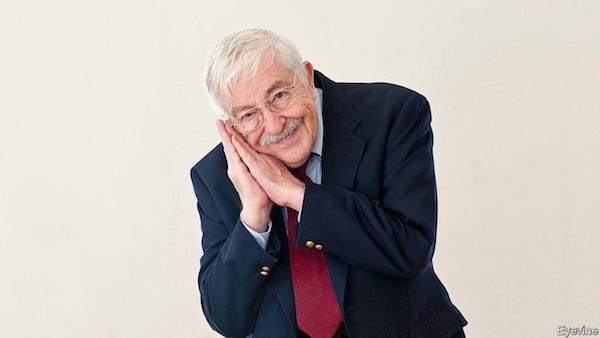
Learn more about the science of sleep with these three talks from three different sleep experts! These talks will dive into why we sleep, how to get healthy sleep, and what happens when you don’t get enough sleep. We’ll start the list off with a talk from Dr. William Dement, who was a pioneer in sleep research. He passed away in 2020, but gave this excellent talk at Google back in 2008.
1. Dr. William Dement on Healthy Sleep and Optimal Performance
Dr. William Dement was one of the leading authorities on sleep, sleep deprivation, and sleep disorders. In the 1950s he was part of the sleep research team that discovered REM (Rapid Eye Movement) sleep and connected it to dreaming. Since then he founded the Sleep Research Center at Stanford University and authored numerous papers and books on sleep, and he taught one of Stanford’s most popular courses called “Sleep and Dreams”.
In this one-hour talk at Google, Dr. Dement presents many of the findings he has made throughout his career. He talks about studies that reveal that healthy sleep is key to high-level performance and productivity and that the sleep debt of numerous nights without enough sleep causes a significant reduction in the quality of performance of physical and mental activities. Dr. Dement also speaks about sleep disorders such as sleep apnea and narcolepsy. Learn more about something you do every day with this enjoyable talk on sleep. If you liked his talk, check out his audio book: The Promise of Sleep.
2. Shawn Stevenson on Sleep Smarter
Shawn Stevenson is the host of the popular Model Health Show Podcast and the author of the book Sleep Smarter: 21 Essential Strategies to Sleep Your Way to a Better Body, Better Health, and Bigger Success. In this talk that Stevenson gave at Google, he offers a bunch of practical ways to improve the quality of your sleep which in turn will improve your overall health. He starts by explaining how getting enough sleep will help you burn fat to look better. He also emphasizes the importance of getting good sleep for improving your productivity by citing many studies. Stevenson then lists a variety of ways to improve sleep, from managing alcohol and caffeine consumption to reducing screen time right before bed. It’s an informative talk that will at least get you thinking about sleep, which the average person spends about one-third of their life doing.
3. Matthew Walker on Why We Sleep
Bad news for those of us who get less than 7 hours of sleep per night! Professor Matthew Walker is the Director of UC Berkeley’s Sleep and Neuroimaging Lab, and in this talk at Google he shares his findings from his book Why We Sleep: Unlocking the Power of Sleep and Dreams. Basically, his findings are sleep deprivation leads to shorter lifespans, more cancer, less reproductive health, reduced ability to learn and remember, more mental illness, and a whole lot more disadvantages in life. The adage “I’ll Sleep When I’m Dead” never sounded more foolish than after listening to this talk. Walker answers many questions about sleep-related topics towards the end of the talk. And if you enjoy this talk you might want to check out his podcast, which is all about sleep: The Matt Walker Podcast.
Hopefully, these talks will give you some science-based tips for how to get healthier sleep!
May 30, 2025
4 Talks by Brene Brown on Shame & Vulnerability

Author and podcaster Brene Brown has written six bestselling books and hosts two podcasts: the Unlocking Us Podcast and the Dare to Lead Podcast. Her popularity exploded with her 2010 TED Talk The Power of Vulnerability which has now been viewed over 20 million times.
Her research and talks on shame and vulnerability have certainly struck a chord with millions of people. And all her books since then have been bestsellers, including The Gifts of Imperfection, Daring Greatly, Rising Strong, Braving the Wilderness, Dare to Lead, and Atlas of the Heart. Below we’ll highlight four talks that Brene Brown has given on these topics starting with her original TED Talk:
1. Brene Brown: The Power of Vulnerability
Watch this powerful TED talk by author and researcher Brene Brown. In this insightful talk, she tells the story of how her social worker research lead her to study shame for over 6 years. Convinced she could use her data to deconstruct and control shame, she eventually came to a much different conclusion. She saw that the people who have a sense of love, belonging, and worthiness, also had a sense of vulnerability where they did not know the outcome of their decisions. This led to Brown having a “breakdown” in her own ideas of shame and worthiness, which lead to even more insight into how we numb our emotions to avoid vulnerability.
2. Brene Brown: Listening to Shame
Watch Brene Brown’s follow-up TED Talk to her popular talk The Power of Vulnerability. In this talk, Brene confronts the shame epidemic head on, and she explores how shame is brought about for men and women throughout our culture. She emphasizes that vulnerability is not weakness, but that it is at the heart of creativity and “daring greatly”.
3. The Courage to Be Vulnerable
Professor and author Brene Brown’s research on shame and vulnerability have hit home with many people as evidenced by her popular TED talk The Power of Vulnerability and her bestselling books including The Gifts of Imperfection and Daring Greatly. In this interview with Krista Tippett from the On Being radio show, Brene Brown tells the story of how she found out the characteristics of someone who is “whole-hearted” and how she discovered they were the opposite of who she was at time. In a culture that often demands perfectionism and shames those who fall short, Brown’s work has been insightful into how we can develop the courage to be more vulnerable and open to our own emotions, in our relationships, and in parenting.
4. Brene Brown: The Power of Vulnerability
This talk is also called The Power of Vulnerability, but it’s different from her TED Talk. In this talk from the RSA, Brown emphasizes the prevalence of fear and blame in contemporary society. When we go through the day’s news, it’s almost always concerning what we should be afraid of and who is to blame. Brown says this societal obsession also translates into our personal lives, which are plagued with fear and blame. She also points out the pernicious pervasiveness of shame and perfectionism. Brown encourages us to flip the script on these emotions by pushing us towards empathy and vulnerability. She defines the difference between sympathy and empathy and provides many examples of how we can put empathy to work in our daily lives.
Enjoy these talks from Brene Brown, and you can check out all her titles on our site here:
Brene Brown Audio & Video on LearnOutLoud.com